
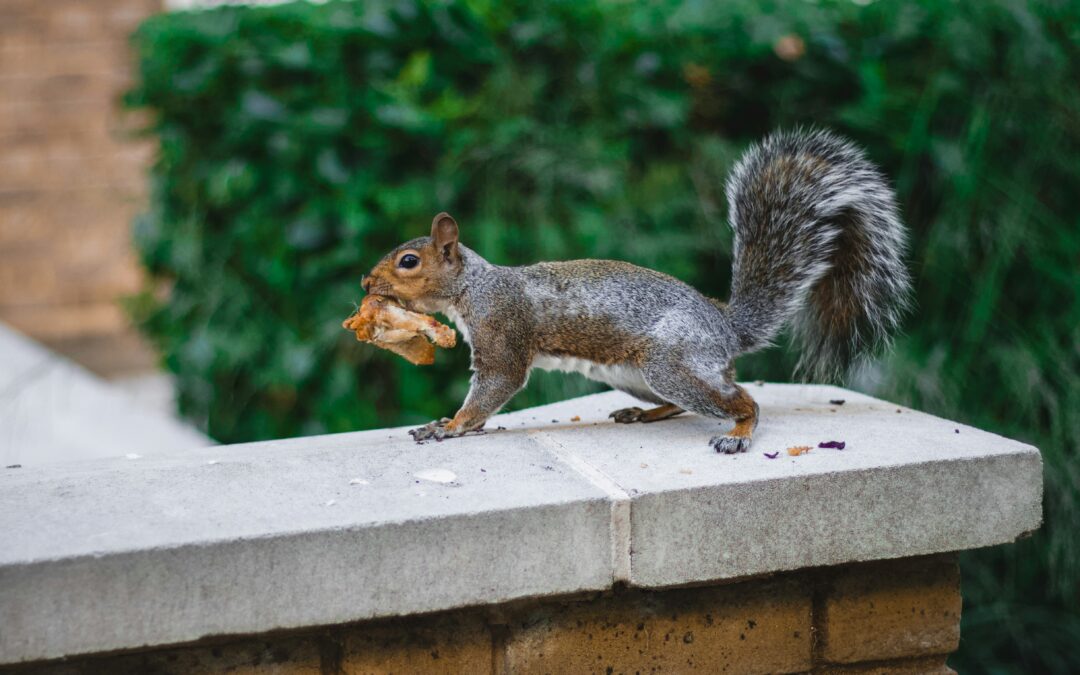
If you’ve ever sat in a park and watched squirrels dart across the grass, leap between trees, or pause with an acorn in their mouth, you’ve probably wondered: how do squirrels actually remember where they’ve buried their food? These little creatures are famous for stashing away nuts, seeds, and acorns in countless hiding spots. The fascinating part is that, somehow, many of them manage to recover a good portion of those hidden treasures later on.
This question may seem simple on the surface, but the way squirrels locate their nuts connects to memory, survival instincts, and even the balance of forests. It’s not just about a cute habit; it’s about an animal’s entire survival system. Let’s take a deep dive into how this works.
Squirrels and Their Nut-Hiding Habit
First, let’s start with why squirrels bury nuts in the first place. Unlike some animals that store food inside burrows or nests, squirrels use a method called scatter-hoarding. Instead of keeping all their food in one place, they bury small amounts in many different spots. This strategy reduces the risk of losing everything if another animal finds one of their hiding places.
Scatter-hoarding also spreads out their resources across a wider area, which can help them survive through cold winters when food is scarce. By distributing their food like this, they increase the chances that at least some of it will be safe when they need it later.
The Role of Memory
A big piece of the puzzle is memory. Squirrels don’t just bury nuts at random and then hope to stumble across them later. They actually rely on spatial memory, which is their ability to remember the location of objects in their environment.
Think of it this way: just like you can probably remember where you parked your car in a large lot, a squirrel can recall where it buried its acorn in the middle of a big park. Their brain has adapted over time to make this possible.
Interestingly, studies show that the part of the squirrel’s brain responsible for memory, the hippocampus, is larger in species that rely more heavily on storing food for winter. This means their biology is literally wired for the task.
How Do They Actually Find the Nuts?
Here’s where it gets interesting. Squirrels use a mix of strategies:
Spatial Memory: They remember landmarks, like specific trees, rocks, or pathways, and use those to recall where they buried nuts.
Smell: If they forget, their strong sense of smell helps. They can detect nuts buried several centimeters below the ground.
Patterning: Some squirrels use an organizational method when hiding nuts. They may group certain types of food in certain areas, almost like having a filing system.
Trial and Error: Sometimes they dig around and check several spots before finding the right one.
This blend of memory, scent, and organization makes them surprisingly effective at recovering their stashes.
The Numbers Game
Despite their skills, squirrels don’t find every single nut. In fact, a large portion of what they hide never gets recovered. While this may seem wasteful, it has a huge environmental benefit: those forgotten nuts often sprout into new trees.
So while squirrels are looking out for themselves, they’re also playing an accidental role in planting forests. Many oak trees owe their existence to the fact that a squirrel forgot about an acorn.
Do All Squirrels Hide Nuts?
Not every squirrel has the same habits. Tree squirrels, such as gray squirrels and fox squirrels, are famous for scatter-hoarding. Ground squirrels, however, have slightly different strategies. Some species don’t bury nuts at all but instead eat seeds and plants directly.
It depends on the environment too. Squirrels living in areas with long, harsh winters rely heavily on storing food, while those in milder climates may not stash as much.
How Long Can They Remember?
One of the big questions researchers have studied is how long squirrels can actually remember their hiding spots. It turns out, they can recall locations for several weeks, and sometimes even months.
But their memory isn’t perfect. Over time, accuracy fades. This explains why so many hidden nuts end up left behind, which again ties back to that unintentional reforestation effect.
A Look Into Squirrel Behavior
Watching a squirrel bury a nut can reveal a lot. They don’t just drop it in the dirt. They often:
- Dig a shallow hole.
- Place the nut carefully inside.
- Cover it with soil or leaves.
- Pat down the surface to make it less noticeable.
Sometimes they even pretend to bury a nut if they feel another squirrel is watching. This clever behavior is called deceptive caching. It’s basically their way of throwing off thieves.
From My Own Personal Experience
From my own personal experience, sitting in a quiet park and observing squirrels is almost like watching a puzzle unfold. You can see them darting around, pausing at certain spots, and sometimes digging only to quickly cover the hole again. On one occasion, I noticed a squirrel circle back to the same tree several times, as if double-checking its hiding place. That small act showed me how much attention they give to securing and later recalling their food supply.
Why Don’t They Lose Track Completely?
It seems almost impossible that a squirrel could remember hundreds or even thousands of hiding spots. But remember, they don’t always recover every nut. They only need to find enough to survive. Their strategy doesn’t depend on perfect recall—it depends on having a large number of chances.
Think of it like keeping a lot of small savings accounts instead of one big one. If you forget about some of them, you’ll still have enough in the others to get through.
Environmental Impact
The way squirrels bury nuts isn’t just a quirky behavior, it’s part of the larger ecosystem. By moving nuts away from parent trees and into new soil, they help forests spread and grow. Some scientists even consider squirrels accidental “forest farmers.”
In this sense, their forgetfulness is just as important as their memory. Both sides of the habit play a role in nature’s balance.
Expanding the View
The story of squirrels finding their nuts teaches a bigger lesson about survival strategies in animals. Many creatures have unique ways of preparing for hard times. For squirrels, memory and caching are the keys. For others, it might be migration, hibernation, or building shelters.
The takeaway is that what looks like simple behavior is often an intricate survival system developed over countless generations.
Closing Thoughts
So, how do squirrels find their nuts? They rely on a blend of memory, smell, organization, and sheer numbers. They don’t need to be perfect, they just need to be good enough. The nuts they don’t recover end up feeding forests, showing how even small creatures shape the environment around them.
Watching a squirrel scurry across a park may look like a small moment in nature, but behind that moment is an entire strategy for survival, growth, and even forest renewal.