
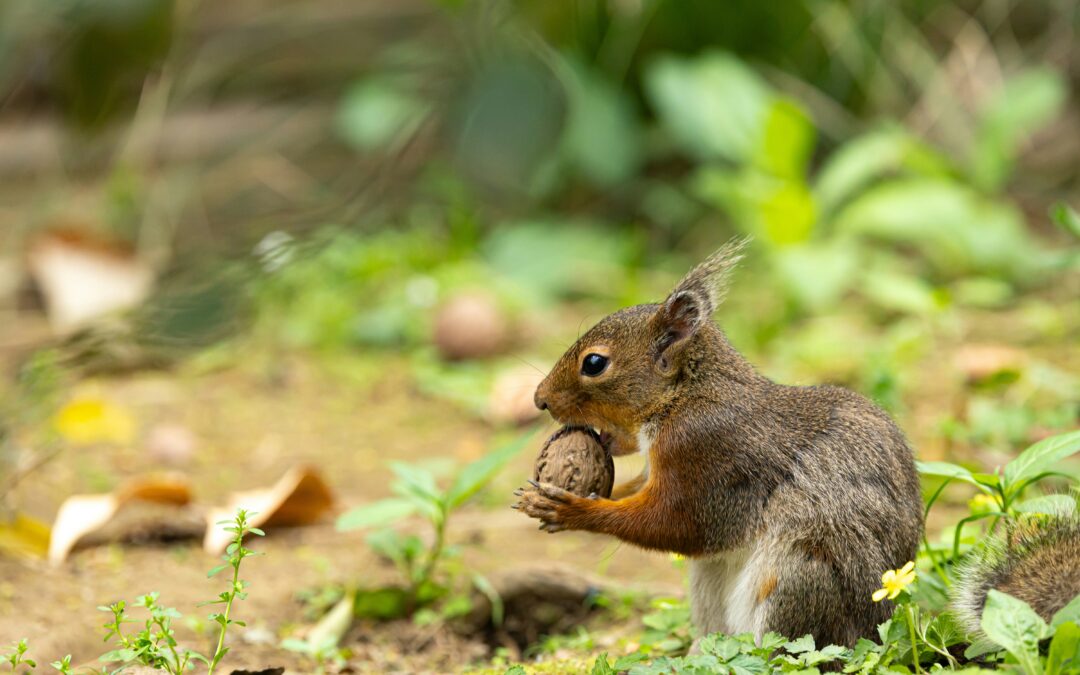
If you’ve ever sat in a park and watched squirrels scurry around, you’ve probably noticed how much time they spend with acorns. These little nuts seem like their prized treasure. You might see a squirrel holding one tightly, flipping it in its tiny paws, and then suddenly cracking it open with surprising skill. It’s easy to think it’s just instinct, but the way squirrels handle acorns is much more complex than it looks. From my own personal experience, watching squirrels in backyards and wooded areas, it’s fascinating to see how precise they are with such a simple task.
In this post, we’ll take a closer look at how squirrels open acorns, what techniques they use, why they treat different acorns differently, and even what this behavior says about their intelligence. By the end, you’ll see that squirrels aren’t just random nut eaters, they’re clever little problem-solvers who know exactly what they’re doing.
Why Acorns Matter to Squirrels
Acorns aren’t just snacks for squirrels. They’re an essential part of survival. Acorns are rich in fats, proteins, and carbohydrates, which give squirrels energy to survive through the colder months. Since acorns drop in fall, squirrels quickly gather them and decide whether to eat them right away or stash them underground for later.
But not all acorns are the same. Some are bitter, while others are sweet. Some last for months in storage, while others rot quickly. Squirrels know this difference, and their method of opening an acorn often depends on the type.
The Step-By-Step Process of How Squirrels Open Acorns
When you look at a squirrel with an acorn, you might think it’s just gnawing away. But the process is actually structured. Here’s how it works:
1. Holding the Acorn in the Right Position
Squirrels usually hold acorns with their front paws as if they’re holding a tiny piece of corn on the cob. Their paws are flexible and act almost like hands, which allows them to rotate the acorn until they find the right angle to bite.
2. Targeting the Weak Spot
Acorns have a tough outer shell, but like most nuts, they also have weak points. The cap that attaches the acorn to the tree often leaves a thinner area near the base. Squirrels instinctively go for this area. They bite down with sharp, chisel-like teeth that are perfectly shaped for cutting into the shell.
3. Cracking the Shell
The first bite is about getting past the hard layer. A squirrel’s teeth never stop growing, which makes them strong enough to handle constant gnawing without wearing down. After creating a crack, the squirrel keeps working at it, rotating the acorn to widen the opening.
4. Extracting the Nut Meat
Once there’s an opening, the squirrel peels back the shell bit by bit with its teeth. Some squirrels will spit out shell fragments, while others hold onto the acorn and nibble carefully until they reach the edible part.
5. Eating or Storing
Sometimes, squirrels eat the acorn right away, especially if they need quick energy. Other times, they break it open just enough to test the taste and then bury it if it’s good for storage.
Red Oaks vs. White Oaks: Why Squirrels Choose Carefully
Here’s where things get even more interesting. Not all acorns are equally good, and squirrels know it.
- White oak acorns are sweeter and germinate quickly. This means they sprout into seedlings not long after falling, so they aren’t great for long-term storage. Because of this, squirrels often eat white oak acorns immediately.
- Red oak acorns have higher tannin levels, which makes them taste bitter. They also take longer to germinate, which means they can last underground through the winter. Squirrels usually bury red oak acorns for later.
Based on my overall experience observing squirrels over the years, I noticed that they almost always crack open white oak acorns right away. Red oak acorns, on the other hand, are carefully tucked away in the ground, sometimes even with the shells cracked slightly to prevent sprouting.
Squirrels and Memory: Storing Acorns After Opening
Opening acorns isn’t just about eating—it’s also about planning. Squirrels are famous for burying nuts, and their memory plays a huge role in this. Studies have shown that squirrels use landmarks like trees, rocks, or even the sun’s position to remember where they’ve hidden their acorns.
Sometimes squirrels will slightly crack an acorn open before storing it, almost like giving it a quick test run. If it’s too bitter, they may reject it entirely. If it’s just right, they’ll hide it for later. This ability to judge an acorn’s quality shows just how skilled they are at handling food.
The Science Behind Their Teeth
A key reason squirrels can open acorns so easily is their teeth. A squirrel’s front teeth, or incisors, are long, sharp, and designed for constant use. Unlike human teeth, they never stop growing. This means squirrels are always filing them down by chewing on hard materials like bark, sticks, and, of course, acorns.
These teeth work like built-in tools. When a squirrel bites into an acorn, its teeth act like chisels, splitting the shell apart. Their jaw strength also gives them extra power, making it possible to break open one tough nut after another.
Why Watching Squirrels Feels So Impressive
There’s something strangely captivating about watching a squirrel crack open an acorn. Maybe it’s the way they look so serious while doing it, or maybe it’s the thought that such a small animal has developed such smart techniques.
From my own personal experience, I’ve found that sitting quietly and observing squirrels can teach you patience. You start noticing how each squirrel has a slightly different method. Some are quick and aggressive, snapping the shell in seconds, while others are careful, rotating the acorn until they find the perfect spot.
Beyond Acorns: What Else Squirrels Open
Although acorns are the classic food associated with squirrels, they’re not limited to them. Squirrels are skilled at opening other nuts and seeds too. Walnuts, pecans, and even pine cones can all be cracked open with similar strategies. Each food requires slightly different handling, but the process always involves the same sharp teeth, strong jaws, and clever use of their paws.
This versatility shows just how adaptable squirrels are. They don’t just rely on one food, they figure out how to get into almost anything edible that’s protected by a shell.
Why People Find This Question Fascinating
The question “How do squirrels open acorns?” seems simple, but it reveals something deeper. It’s about curiosity. People like to understand how animals survive, and seeing a squirrel do something so small yet so precise makes you wonder how much thought goes into it.
It also makes you reflect on how resourceful animals can be. Squirrels don’t have tools like humans do, but they’ve adapted perfectly to their environment, turning their own bodies into tools. That in itself is a lesson in survival.
Wrap-Up
Squirrels don’t just randomly bite into acorns. They use a clear process, holding, cracking, rotating, and extracting. They know the difference between acorns from red oaks and white oaks, and they adjust their behavior depending on whether they want an immediate snack or a long-term storage option. Their sharp teeth, strong jaws, and smart decision-making all come together in this tiny daily act.
From my own personal experience, the more you watch squirrels, the more you realize that opening an acorn is far from simple. It’s a mix of instinct, skill, and even a little strategy. And the next time you see a squirrel holding an acorn in a park, you’ll know just how much work and intelligence is hidden behind that small moment.