

Gardening can be one of the most rewarding hobbies, but it comes with its fair share of challenges. One of the sneakiest and most persistent culprits is squirrels. They can dig up bulbs, nibble on fruits, and scatter seeds, leaving a trail of destruction in their wake. From my own personal experience, dealing with these tiny bandits requires a mix of strategy, persistence, and season-specific planning. Here’s a detailed guide on how to protect plants and enjoy a thriving garden all year long.
Understand Squirrel Behavior First
Before diving into solutions, it’s important to understand why squirrels target gardens. They are opportunistic feeders, constantly on the hunt for nuts, fruits, vegetables, and even tender seedlings. Their activity peaks in late summer and fall when they prepare for winter, but they can cause damage year-round if food is scarce. Knowing their habits, such as burying nuts, climbing fences, and exploring bird feeders, helps you anticipate problems and plan effective defenses.
Spring Gardening Tips
Spring is a critical season because it’s when bulbs, seedlings, and young plants start to grow. Squirrels often dig up newly planted bulbs, mistaking them for nuts.
To prevent this:
- Use physical barriers: Cover bulbs with chicken wire or mesh cages until they sprout. Once plants are strong enough, you can remove the protection.
- Plant deterrent bulbs: Some bulbs, like daffodils and alliums, are naturally unappealing to squirrels. Mixing these with more vulnerable bulbs can reduce losses.
- Mulch strategically: A thick layer of mulch can make digging less appealing. Coarser mulch types, like pine bark, also deter squirrels because they don’t like the texture.
- Distract with alternatives: Offering squirrels a small pile of nuts or corn away from your main garden can keep them busy. From my own personal experience, this works best when placed near trees or corners of the yard, but away from tender seedlings.
Summer Gardening Tips
Summer brings ripening fruits, vegetables, and flowers, prime targets for squirrels. They’re attracted to bright, soft fruits like tomatoes, strawberries, and berries.
Here’s how to protect your summer harvest:
- Netting and cages: Use bird netting over fruiting plants. Make sure the netting is secured at the bottom so squirrels can’t crawl underneath.
- Raised beds: Elevating garden beds can discourage squirrels, especially if combined with wire mesh underneath.
- Reflective deterrents: Hanging reflective objects, like old CDs or metallic tape, can scare squirrels away temporarily. They dislike sudden movements and bright flashes.
- Companion planting: Strong-smelling herbs like rosemary, thyme, and mint can repel squirrels. Plant these near vulnerable crops to create a natural barrier.
Fall Gardening Tips
Fall is peak squirrel season. They are busy storing food for the winter, which means digging up any buried bulbs, seeds, or young plants.
To protect your garden in fall:
- Install fencing: A low fence with small mesh can keep squirrels out of beds. Burying it a few inches underground stops them from digging under.
- Harvest early: Pick fruits and vegetables as soon as they ripen. Leaving ripe food on plants is like leaving a buffet open for squirrels.
- Use repellents: Squirrels dislike certain smells, including cayenne pepper, garlic, or predator urine. Sprinkling these near plants can create a barrier. Rotate the deterrents to prevent squirrels from getting used to them.
- Secure compost: If compost is left exposed, squirrels will dig through it. Use a closed bin to keep them away while maintaining compost quality.
Winter Gardening Tips
Winter might seem quiet, but squirrels are still active, especially if snow covers natural food sources. They may dig up bulbs, seeds, or leftover produce.
Winter-proof your garden with these strategies:
- Protect bulbs and seeds: Cover planting areas with heavy mulch or netting. If bulbs are dormant, a thick layer of straw can prevent digging.
- Maintain feeders away from plants: If feeding birds, place feeders far from the garden. Squirrels are clever and will raid the nearest food source.
- Use motion-activated deterrents: Devices that produce sudden noise or water sprays can keep squirrels at bay when food is scarce.
General Year-Round Strategies
Some tactics work regardless of the season and can create a consistent defense:
- Wire mesh barriers: Surrounding garden beds with mesh or hardware cloth is effective long-term. Bury the mesh a few inches into the soil to prevent tunneling.
- Remove attractants: Fallen fruits, open compost, and unsecured trash can draw squirrels. Keeping the garden tidy reduces their motivation to visit.
- Plant squirrel-resistant species: Incorporate plants that squirrels tend to avoid, like daffodils, alliums, and lavender. This can act as a natural buffer around more delicate plants.
- Train squirrels with distractions: From my own personal experience, creating an alternative feeding station away from the garden works surprisingly well. Regularly refreshing this area keeps squirrels occupied and reduces garden raids.
Tools and Products That Help
Investing in a few tools can make life easier:
- Squirrel-proof bird feeders: If bird food is attracting squirrels, these feeders allow birds access but block squirrels.
- Floating row covers: Lightweight fabric covers protect plants without restricting growth or sunlight.
- Motion sensors and sprinklers: These are excellent for larger gardens, startling squirrels without harming them.
- Repellent sprays: Organic sprays made from hot peppers, garlic, or predator scents can be applied to vulnerable plants.
Seasonal action plan chart that visually breaks down squirrel-proofing steps for spring, summer, fall, and winter.
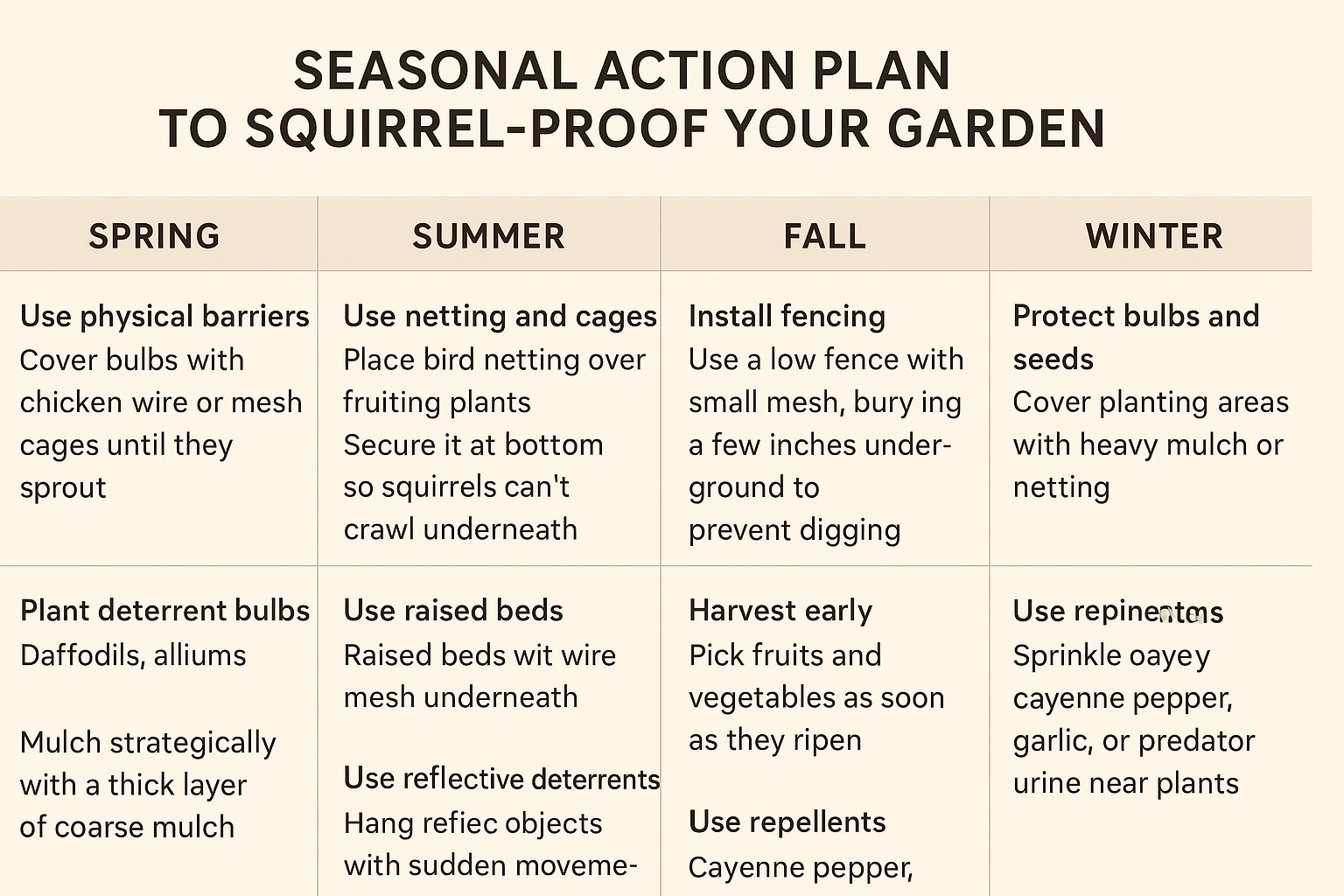
Seasonal action plan chart
A Detailed Comparison of Physical vs. Natural Deterrents
When it comes to keeping unwanted guests at bay, whether it’s pests, animals, or even environmental intrusions, the options can feel overwhelming. There’s a broad range of deterrents, but two major categories dominate the discussion: physical deterrents and natural deterrents. Both approaches have their unique benefits and limitations, and understanding them can save time, money, and frustration. choosing the right deterrent often depends not just on the target but also on the environment, maintenance capabilities, and long-term goals.
Physical Deterrents
Physical deterrents are tangible, often mechanical, and rely on creating a barrier or an uncomfortable experience for the unwanted intruder. These can range from fences, nets, spikes, and barriers to electronic devices like ultrasonic repellents. The appeal of physical deterrents is their straightforward approach, if it’s in the way or uncomfortable, the intruder typically avoids it.
Advantages of Physical Deterrents
One of the main benefits of physical deterrents is their reliability. For example, a well-built fence around a garden will generally prevent larger animals like deer or stray dogs from entering, as long as there are no gaps or weak points. Similarly, spikes on window ledges or roofs effectively stop birds from perching and nesting. The results are immediate and often measurable, which makes these deterrents appealing for people who want a clear, visible solution.
Another advantage is versatility. Physical deterrents can be customized for different environments and specific targets. For instance, smaller mesh fences can keep rabbits out, while taller, electrified fences protect against larger mammals. Even in urban settings, motion-activated lights or alarms act as physical deterrents, discouraging trespassers or wildlife alike.
Additionally, physical deterrents often require minimal chemical input, which is a significant benefit for environmentally conscious individuals. They rely on mechanics and presence rather than introducing substances that could disrupt the ecosystem or affect other animals unintentionally.
Limitations of Physical Deterrents
Despite their benefits, physical deterrents are not foolproof. One major limitation is maintenance. Fences rust, nets tear, and electronic devices malfunction. Regular inspections and repairs are necessary to maintain effectiveness. Without upkeep, a previously effective deterrent can become completely useless.
Cost is another factor. High-quality fences, gates, or electronic repellents can require a significant upfront investment. For some, this may be justified, but for others, it could become a deterrent in itself, especially if the area needing protection is large.
Lastly, physical deterrents can be restrictive. While they keep unwanted animals out, they may also inadvertently block access for beneficial wildlife or even restrict human activity in the area. For example, netting over a vegetable patch can stop birds from eating the produce but also prevent pollinators from accessing flowers, which can affect plant health and growth.
Natural Deterrents
Natural deterrents, on the other hand, rely on using environmental cues, smells, tastes, or behavioral tendencies to discourage intrusions. These include planting certain herbs or flowers to repel insects, using predator scents to scare animals, or applying natural oils to deter pests. The key principle is to influence behavior without creating a physical barrier.
Advantages of Natural Deterrents
The primary advantage of natural deterrents is their sustainability. Because they often involve organic substances or mimic natural threats, they are less likely to cause environmental harm. For example, planting marigolds around a garden can help repel aphids and other insects, reducing the need for chemical pesticides. Similarly, sprinkling predator urine or using essential oils like peppermint or eucalyptus can discourage rodents and small mammals without harming them.
Natural deterrents also tend to be low-cost and easy to implement. Many require only common household ingredients or inexpensive plants. Compared to installing a fence or electronic device, this makes natural deterrents more accessible for people on a budget or for those looking to minimize infrastructure changes in their space.
Another subtle but important benefit is their flexibility. Natural deterrents can target multiple types of intruders simultaneously. For instance, garlic planted along garden borders can deter insects, deer, and even some rodents. Essential oils can be mixed and matched to address different pests, providing a multi-layered approach without the need for complex installations.
Limitations of Natural Deterrents
However, natural deterrents are not without challenges. One limitation is their inconsistent effectiveness. Many natural methods rely on the target animal’s response, which can vary. While some pests may avoid a particular plant or scent, others may ignore it entirely, especially if food or shelter is in high demand.
Maintenance is another consideration. Natural deterrents often need frequent reapplication or replenishment. For example, essential oil sprays can evaporate quickly, and predator scents can fade, meaning consistent attention is required to maintain their effectiveness.
Natural deterrents also generally work best as preventive measures rather than solutions after the fact. They may deter animals from entering an area but are less effective at removing intruders that have already established a presence. Physical deterrents often have the upper hand in reactive scenarios because they create immediate barriers or discomfort that the intruder must confront.
Let’s Compare Physical and Natural Deterrents Side by Side
When deciding between physical and natural deterrents, several factors come into play.
Effectiveness: Physical deterrents tend to provide more immediate and consistent results, while natural deterrents can be less predictable and often require testing and adjustments.
Cost: Natural deterrents are typically lower in upfront cost but may demand ongoing maintenance, whereas physical deterrents often involve a larger initial investment but lower day-to-day management.
Environmental Impact: Natural deterrents usually have minimal environmental impact, whereas physical deterrents—especially electronic ones, may disrupt wildlife or require energy use.
Ease of Use: Physical deterrents are often set-and-forget, although maintenance is still required, whereas natural deterrents demand regular attention, especially when weather conditions affect their potency.
Aesthetics: Physical barriers can sometimes be visually intrusive or clash with landscaping, while natural deterrents often blend seamlessly with the environment. For example, planting lavender as an insect deterrent enhances garden aesthetics while serving a practical purpose.
Practical Applications and Considerations
From my own personal experience, the best results often come from combining both approaches. For instance, in a backyard garden setting, a sturdy fence can block larger animals, while planting pest-repelling herbs like basil and mint can help deter insects. This multi-layered approach ensures coverage against a wider variety of intruders while balancing costs and environmental impact.
In urban settings, physical deterrents like window screens or balcony nets work well for birds, while natural deterrents like citrus peels or essential oils can deter insects. The combination minimizes the need for harsh chemicals while ensuring effective protection.
It’s also worth considering the target’s behavior. Animals are often creatures of habit, and physical barriers can disrupt their routines more effectively. Natural deterrents, while subtler, may influence behavior gradually and are better suited for preventive measures. Understanding the target’s habits, preferences, and vulnerabilities helps tailor the approach and improves outcomes.
Case Study Examples
Consider a vegetable garden threatened by rabbits. A physical deterrent like a wire mesh fence is highly effective at keeping the rabbits out, but installing it can be labor-intensive. On the other hand, planting garlic and onions along the perimeter can naturally repel rabbits but may not provide complete coverage. Using both together creates a more resilient defense system.
Similarly, for homeowners dealing with ants, physical deterrents like sealing entry points prevent invasion, while natural deterrents such as vinegar or lemon juice can discourage trails without using chemicals. In combination, these methods reduce infestation risk while keeping the environment safe.
Even for larger wildlife, like deer in suburban areas, the combination approach works well. Physical deterrents, such as tall fences or deer netting, stop entry, while natural deterrents like planting strong-scented herbs or spraying predator scents make the environment less appealing. The synergy between methods reduces reliance on any single solution and improves long-term effectiveness.
Long-Term Considerations
When deciding between physical and natural deterrents, it’s essential to think long-term. Physical deterrents often last longer if properly maintained, but they require periodic inspections and repairs. Natural deterrents may need frequent application, and their effectiveness can fluctuate based on environmental conditions.
Additionally, consider seasonal changes. Certain natural deterrents may only be effective during specific times of the year, such as plants that lose their scent in winter or essential oils that evaporate quickly in hot weather. Physical deterrents, while more consistent, may also need seasonal adjustments, like snow removal for fences or protection of electronics from rain.
Finally, personal goals matter. If the objective is minimal maintenance and immediate results, physical deterrents may be the priority. If sustainability, aesthetics, and environmental safety are more important, natural deterrents may take precedence. Often, a combination tailored to the unique environment yields the best results.
Conclusion
Physical and natural deterrents each bring valuable tools to the table. Physical deterrents provide immediate, consistent results but can be costly and require maintenance. Natural deterrents offer eco-friendly, cost-effective solutions but may require patience, regular attention, and testing to achieve the desired effect.
From my own personal experience, the most effective approach often involves blending both strategies. Using physical barriers where immediate results are necessary and natural methods for preventive and supplementary protection ensures comprehensive coverage. This combination maximizes efficiency, reduces environmental impact, and often provides the best long-term results.
Ultimately, the choice between physical and natural deterrents should reflect the specific situation, target, and personal preferences. With careful planning and a thoughtful approach, it’s possible to create an environment that is both safe and harmonious, keeping unwanted intrusions at bay without unnecessary stress or disruption.
Final Thoughts
Squirrels are persistent, smart, and adaptable. A single strategy is rarely enough; a combination of seasonal, physical, and natural deterrents is the key to minimizing damage.Planning ahead by understanding squirrel behavior and preparing your garden for each season makes a huge difference. Patience is essential, but the reward is a flourishing garden with minimal interruptions from furry intruders.
Gardening is about trial and error, so don’t be discouraged if a strategy fails at first. By observing patterns, rotating deterrents, and staying consistent, it’s possible to coexist with squirrels without losing crops or beautiful plants.