
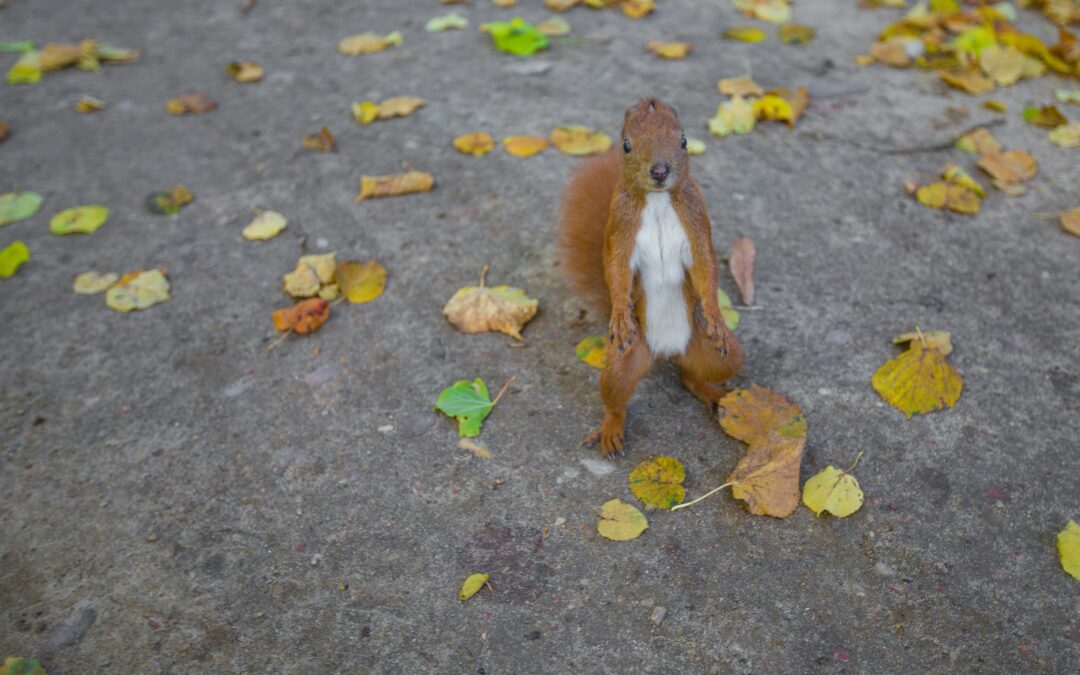
You might see squirrels dart across the road or sprint up a tree and think, “Wow, that’s fast!” But how fast is a squirrel really? The answer is a lot more interesting than just a single number. Their speed depends on the type of squirrel, their environment, and even the situation they’re in, whether they’re being chased, searching for food, or just playing around.
In this post, let’s break down squirrel speed in detail. I’ll share actual figures, comparisons with other animals, reasons behind their agility, and even some fun insights that I’ve noticed from my own personal experience.
Average running speed of a squirrel
On flat ground, most squirrels can run at 10 to 20 miles per hour (16 to 32 km/h). That might not sound as fast as a car or even a dog, but for their small body size, it’s extremely quick.
To put it into perspective:
A housecat runs at about 30 miles per hour.
A human jogs at about 6 to 8 miles per hour on average.
Usain Bolt’s top recorded sprint was just under 28 miles per hour.
So, while a squirrel won’t beat a cat in a race, it will definitely leave most people in the dust during a short chase.
Why squirrels seem faster than they actually are
Here’s the thing: squirrels look even faster than the numbers suggest. Their sudden, zigzagging movements make them appear like blurs. They don’t just sprint in straight lines; they leap, dart, and change direction in a split second. This isn’t wasted motion, it’s a survival trick.
Predators like hawks, snakes, and cats struggle to predict where a squirrel will dart next. That unpredictability makes a squirrel look like it’s running at lightning speed, even if the actual numbers are moderate.
Climbing speed
If you’ve ever tried to chase a squirrel (or even just watched one escape up a tree), you know how insanely fast they climb. A squirrel can scale a tree trunk at about 12 to 15 miles per hour, and sometimes even faster for short bursts.
The reason they climb so quickly is because of their powerful hind legs and sharp claws, which grip bark like climbing hooks. For a predator on the ground, that vertical sprint is like hitting a wall, game over.
Leaping speed and distance
Running isn’t their only trick. Squirrels are excellent jumpers. A healthy squirrel can leap up to 10 feet horizontally and 8 feet vertically. Imagine covering that kind of distance in one bound when your body is only a foot long!
The speed in their jumps comes from their muscle power. They launch themselves with such force that they can cross gaps between trees without losing balance. If you’ve ever seen one miscalculate, though, it’s both funny and a little shocking. From my own personal experience, I once watched a squirrel overshoot a branch and tumble through leaves, only to land safely and sprint off as if nothing happened. That resilience is part of what makes squirrels so fascinating.
Types of squirrels and their speeds
Not all squirrels run at the same pace. Different species have their own average speeds and behaviors.
Gray squirrels – Common in many cities and parks, they reach speeds of 15 to 20 mph.
Red squirrels – Slightly smaller, more agile, but usually max out at 14 to 18 mph.
Ground squirrels – Spend more time on land, and can hit 15 mph with strong sprints to their burrows.
Flying squirrels – Don’t actually “fly,” but they glide. Their speed is less about running and more about covering long distances through the air at controlled speeds.
Let’s Compare squirrels to other animals
It’s fun to measure squirrels against other familiar creatures:
- Rabbit: Around 35 to 45 mph—much faster, but less agile in trees.
- Chipmunk: Close relative of squirrels, usually maxes out at 15 mph.
- Rat: Slower, about 8 mph.
- Horse: Around 55 mph, but obviously built on an entirely different scale.
Even though squirrels aren’t record-breakers in raw speed, their agility makes them kings of short-distance escapes.
Why do squirrels need to be fast?
Speed is survival for a squirrel. Here’s why:
- Escape from predators: Their main defense is speed and unpredictability.
- Food gathering: Racing up trees and across power lines means quicker access to food sources.
- Territory fights: Male squirrels especially use speed during chasing contests.
In short, a slow squirrel wouldn’t survive long in the wild.
Factors that affect squirrel speed
Not every squirrel moves at the same pace every day. Their speed can change based on:
- Age: Young squirrels are playful but not as fast as adults.
- Season: Cold weather slows them down slightly.
- Health: Injuries or illnesses drastically cut speed.
- Surroundings: Urban squirrels adapt differently than forest squirrels. Pavement running is not the same as tree climbing.
Squirrels and human perception of speed
Here’s something fascinating: people often think squirrels are faster than they actually are because of scale. A small animal running at 15 mph looks way faster than a human running at the same pace. Their short legs and quick strides make them appear as if they’re zipping at rocket speed.
Can a human catch a squirrel?
Technically, yes. A healthy adult human sprinting at top speed could outrun a squirrel on open ground. But in reality? No chance. The squirrel’s unpredictable turns and tree climbing give it an unbeatable advantage.
It’s like comparing a Formula 1 car to a rally car. The human might have raw speed, but the squirrel has maneuverability.
From my own personal experience
Based on my overall experience watching squirrels in both cities and rural areas, I can say this: they are master illusionists of speed. I’ve seen them dash across busy streets in ways that made drivers slam brakes. I’ve seen them outmaneuver cats that were much faster in straight sprints. And I’ve seen them leap impossible distances without hesitation.
Squirrels might not win Olympic medals in pure speed, but in terms of survival athletics, they are among the most impressive creatures in everyday life.
Fun facts about squirrel speed
- Their tails act like steering wheels during high-speed jumps.
- They can run headfirst down trees just as fast as up, thanks to rotating ankles.
- During a chase, they rarely run in a straight line longer than a few feet.
Final thoughts
So, how fast is a squirrel? Around 10 to 20 mph, depending on the type and situation. But that number doesn’t capture the full story. Their climbing, leaping, darting, and unpredictable moves make them seem much faster.
Squirrels aren’t built for marathon running or outpacing every predator, they’re built for quick bursts of speed and survival tricks. That’s why they’ve thrived in forests, suburbs, and even busy cities.
Next time you see a squirrel sprint across your path, you’ll know the real numbers. And maybe, like me, you’ll appreciate just how perfectly designed they are for the lives they lead.